How to Quote Retaining Wall Installation Accurately: A Tradie's Guide
Master how to quote retaining wall installation jobs in Australia, covering material costs, excavation, council rules, and common mistakes to ensure profitable projects.
Getting Your Head Around Retaining Wall Costs per Metre
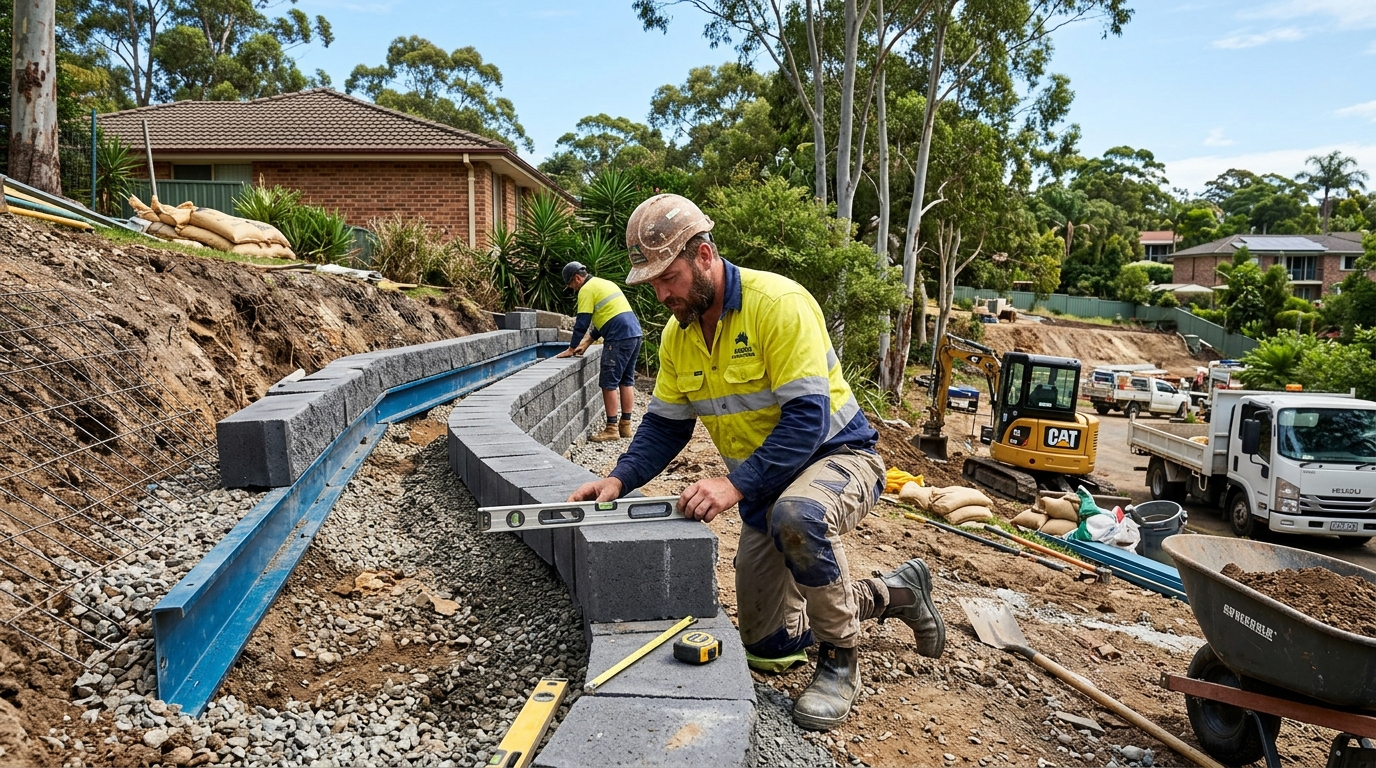
Retaining walls are a common job for landscapers, but they're easy to get wrong on the quote, especially with hidden site costs and varying material prices. The biggest mistake is underestimating excavation and drainage. A basic timber sleeper retaining wall might start at $300 per lineal metre, but complex concrete sleeper walls on challenging sites can easily push past $800 per lineal metre. When you're learning how to quote retaining wall installation, remember that these are not simple fence lines. They hold back tonnes of soil and water, so accuracy is critical. Factor in everything from material delivery to spoil removal and compaction. Skipping proper site assessment is the fastest way to blow your margin, so get it right from the start.
Material Choices: Timber, Concrete, or Block Pricing
The choice of retaining wall material is the biggest price driver. For a timber sleeper retaining wall, H4 treated pine sleepers (200x75mm) are the most common, costing around $30-$45 per 2.4m sleeper from Bunnings, plus posts and fixings. Hardwood sleepers will push that to $60-$80 each. Concrete sleeper pricing varies widely, with standard grey sleepers (200x75mm) starting at $40-$60 each, while decorative or coloured sleepers can hit $80-$120 from suppliers like Tradelink. For block walls, concrete masonry blocks range from $4-$8 per block, not including capping units or the required concrete footing. Always pull current pricing from your suppliers, as these fluctuate monthly. Using last quarter's catalogue is a guaranteed way to lose profit.
Site Assessment and Excavation Challenges That Add Up
Before you even think about putting a number on paper, a thorough site assessment is non-negotiable. Is the ground soft fill, dense clay, or solid rock? Rock excavation can easily add $100-$300 per cubic metre to your costs for jackhammering or specialised machinery. Access for machinery is another huge factor; a tight backyard might need a mini excavator hire at $400-$600 per day, plus operator. Factor in spoil removal – a standard 3-tonne skip bin for soil can cost $350-$600, and you'll often need multiple. Each cubic metre of excavation can turn into 1.5 cubic metres of loose spoil. Underestimating these variables will quickly eat into your margin on any retaining wall job.
Navigating Council Approvals and Engineering Requirements
Most retaining walls over one metre in height, or those built near boundaries, stormwater easements, or likely to impact neighbouring properties, will require council approval and an engineered design. This is not optional. Engineering reports can cost anywhere from $800 to $2,500, depending on the complexity and local soil conditions. Council application fees might add another $200-$500. It's crucial to confirm these requirements with your local council during the quoting phase. A good place to start understanding general guidelines is often your state's fair trading website, for example, www.fairtrading.nsw.gov.au/housing-and-property/building-and-renovating/planning-approvals for NSW. Always include these costs as separate line items in your quote, or you’ll be footing the bill yourself.
Essential Drainage and Footing Requirements for Longevity
Skimping on drainage or footings will lead to retaining wall failure, callbacks, and a damaged reputation. Every retaining wall needs adequate drainage. This typically involves a layer of geo-fabric, a perforated agricultural pipe (aggie pipe) wrapped in filter sock ($3-$5 per metre from Reece), and a generous layer of 20mm aggregate backfill ($60-$90 per tonne from local landscape suppliers). The footing also needs to be robust. For a timber or concrete sleeper wall, this means concrete-filled post holes typically 450-600mm diameter and 900-1200mm deep, depending on wall height and soil. Block walls usually require a reinforced concrete strip footing. Never cut corners on these structural elements; they are non-negotiable for a stable wall.
Calculating Your Labour, Overhead, and Project Margin
Your time and business expenses must be clearly factored into every retaining wall quote. Labour for a simple timber sleeper wall might be around 2-3 hours per lineal metre, while a complex block wall could be 5-8 hours per lineal metre, depending on site conditions. Don't forget your overheads: public liability insurance, tool depreciation, vehicle running costs, and administrative time. These can add 20-30% on top of your direct labour. For precise tracking and professional client presentations, using dedicated quoting software like QuoteMate helps you account for every screw, every hour, and every bit of GST. It ensures your quotes are not only accurate but also reflect the true value of your work and keep your business profitable.
Avoiding Common Traps in Retaining Wall Quotes
Many tradies fall into common traps when quoting retaining walls, turning what should be profitable jobs into headaches. The biggest one is underestimating spoil removal and disposal costs – it's not just the digging. Another trap is forgetting to include the cost of compacting the base and backfill; proper compaction is crucial for stability. Don't overlook the price of specific finishes, such as capping stones for block walls or custom staining for timber. Always get current, accurate supplier rates for all materials, right down to the concrete and rebar. A detailed checklist for each retaining wall job will save you from these costly oversights and ensure your quotes are comprehensive and competitive.
Pro Tips
- Always perform a thorough site visit before quoting any retaining wall job.
- Factor in spoil removal and disposal costs separately; it's more than just excavation.
- Specify all drainage materials, including aggie pipe, geo-fabric, and aggregate backfill.
- Get current pricing directly from suppliers like Bunnings, Reece, or local landscape yards.
- Include a contingency (5-10%) for unforeseen ground conditions or material delivery delays.
- Clearly itemise labour, materials, and any council/engineering fees in your quote.
- Check local council requirements for wall height, location, and structural integrity before quoting.
Quote This Job in Under 2 Minutes
Skip the spreadsheet. QuoteMate’s AI pulls real-time supplier prices and generates a professional PDF quote you can send on the spot.
Or try it on the web →Related Trade
More Guides
- How to Quote Paving Installation: Nail Your Numbers Every Time
- How to Quote Carpet Cleaning for Tradies: Avoiding Common Traps
- Mastering How to Quote a Hot Water System Replacement for Profit
- Nailing Your Margin: How to Quote Bathroom Tiling Jobs Correctly
- Mastering How to Quote Ducted Air Conditioning for Australian Homes
- Mastering How to Quote a Garage Door Replacement Accurately
- How to Quote Outdoor Kitchen Build Projects: A Tradie's Guide to Profit
- How to Quote Window Replacement: A Tradie's Guide to Accurate Estimates