How to Quote Window Replacement: A Tradie's Guide to Accurate Estimates
Learn how to accurately quote window replacement, from understanding glass types and frame materials to calculating labour and avoiding common budget blowouts. Get it right first time.
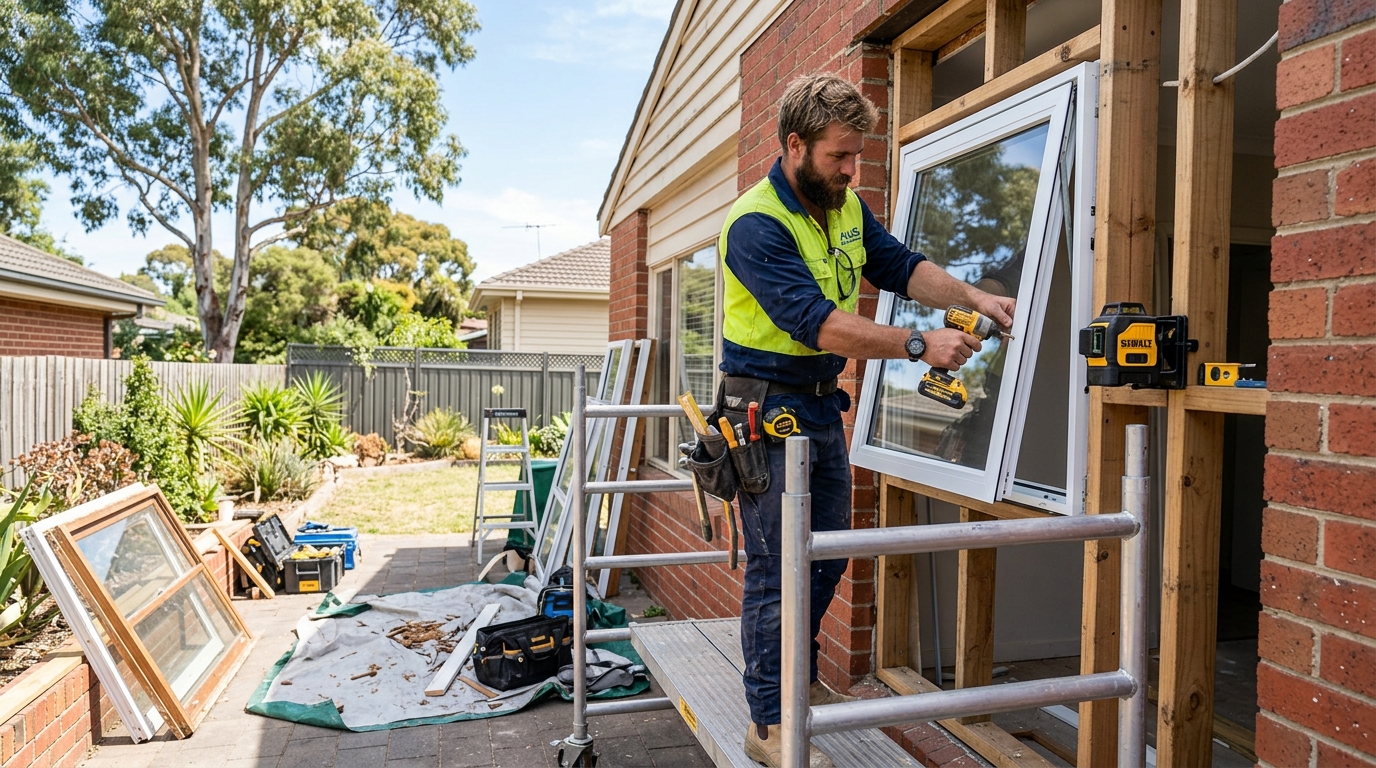
Quick answer
Quote window replacement per opening after measuring within 5mm tolerance, which alone costs $80-$120 per window in site-visit time. A standard aluminium sliding window (1200x900mm) runs $350-$500 versus $600-$900 for uPVC, and toughened safety glass jumps to $250-$300 a panel versus around $100 for float glass. Two tradies at $90/hr means $360-$720 in labour for a simple install, plus a 10-15% contingency.
Getting the Measure Right: First Steps to a Solid Window Replacement Quote
The most crucial part of how to quote window replacement effectively starts with precise measurements and a thorough site assessment. Don't just measure the glass; measure the full opening. Check the existing window frame material – timber, aluminium, or steel – as this dictates removal complexity. Note the wall construction: brick veneer, cavity brick, or weatherboard. Each type has different requirements for flashing, fixing, and finishing. Always measure the height and width in at least three different spots to catch any out-of-square openings, taking the smallest dimension for your order. Inspect the lintel condition above the window; any sag or damage means structural work that needs to be factored in or flagged with the client. Getting this foundational step wrong guarantees headaches and lost margin later on. A basic window replacement without structural issues still requires accurate measurements within 5mm tolerance, especially for custom sizes, costing an average of $80-$120 per window in time for the initial site visit and measurement.
Window Types and Frames: Pricing for Performance and Looks
The choice of window frame material and opening style significantly influences your overall aluminium window quote. Aluminium frames are common in Australia due to their affordability and durability, but they can be less thermally efficient than uPVC or timber. uPVC frames offer superior thermal performance, making them a good option where energy efficiency is a priority, but they come at a higher cost. Timber frames provide a classic aesthetic and good insulation but require more maintenance. Window styles like awning, casement, sliding, or fixed panes each have different hardware and fabrication costs. For instance, a standard aluminium sliding window (1200x900mm) might cost $350-$500 from a supplier like Capral Aluminium, while a similar size uPVC awning window could easily be $600-$900. Custom sizes and non-standard colours will always increase the lead time and the supply cost, typically adding 20-30% to a standard frame price.
Glass Options: Safety, Energy Efficiency, and Security Costs
Glass selection heavily impacts the final quote, affecting safety, energy efficiency, and security. Standard float glass is the cheapest, but not always permissible. Toughened safety glass is mandatory for wet areas, doors, and low-level windows (refer to AS/NZS 2208 for specific requirements), adding roughly $150-$200 per square metre compared to float glass. Laminated glass offers enhanced security and soundproofing, often used in bedrooms or noisy locations. For better thermal performance, consider low-E coatings or double glazing. A double glazed window cost is typically 20-40% higher than a single-glazed unit of the same size and frame type but offers significant long-term energy savings. Bushfire Attack Level (BAL) ratings also dictate specific glass and frame requirements, potentially driving costs up further. Always confirm the required glass type with your supplier before finalising the quote; a 1.2m x 0.9m toughened glass panel costs around $250-$300, whereas a basic float glass panel is closer to $100.
Nailing Down Labour: What's the Real Window Install Labour Cost?
Your window install labour cost depends heavily on the complexity of removing the old window, preparing the opening, and installing the new unit. A straightforward like-for-like replacement in a well-maintained timber frame might take 2-4 hours for two tradies. However, removing old steel or aluminium frames embedded in brickwork, especially if it requires cutting or grinding, can easily double that time. Factor in time for disposing of the old window, flashing, sealing, and any internal rectification work like adjusting plaster reveals or architraves. Site access also plays a role; a second-storey window needing scaffolding or difficult access will significantly increase labour hours. Two tradies working at $90/hr each means a simple window install is $360-$720 in labour alone, before any unforeseen issues. Always allocate time for thorough clean-up and a final quality check.
Beyond the Frame: Additional Costs That Catch Tradies Out
Don't get caught out by overlooked additional costs. These forgotten items are notorious for eating into your margin on a window replacement job. Always include waste disposal, such as skip bin hire for old frames and construction debris, which can run from $300-$600 depending on the volume. Scaffolding hire for multi-storey work or difficult access points is another significant cost, potentially adding $500-$1500 for a multi-day job. New internal timber reveals and architraves are often required, especially when changing frame depths or types. Painting prep, sealing around the new frame, and any minor plaster repairs must also be itemised. Consider the cost of silicones, sealants, shims, and fixings. Even something as simple as replacing damaged flyscreens should be a line item. For example, a standard 900x1200mm window replacement could incur $50-$100 in consumables and fixings from your hardware supplier, plus at least $150-$250 for waste disposal if a skip is needed.
Putting It All Together: Building Your QuoteMate Estimate
To build a comprehensive and professional estimate, break down every component into clear, itemised entries, use current supplier pricing, and factor in your required margin. List the old window removal, new window supply (specify type, frame, glass), installation labour, flashing, sealing, trim, and waste disposal as separate line items. This transparency helps clients understand the value. Using quoting software like QuoteMate helps automate this, pulling real-time supplier pricing for materials and letting you quickly adjust labour hours based on job complexity. Ensure your profit margin (typically 15-25% gross profit on materials and labour combined) is applied consistently across the quote. For example, if a new window costs $450 from a supplier, selling it at $560 gives you a decent mark-up, clearly showing the client the cost of the unit and your handling fee. A detailed quote avoids disputes and builds client trust.
Dodging the Bullet: Common Mistakes When Quoting Window Replacement
The fastest way to lose money on a window replacement is to quote based on outdated prices, underestimate removal time, or fail to account for hidden issues. Material prices, especially for glass and aluminium, fluctuate. Always pull current pricing from your suppliers before finalising a quote. Underestimating the time it takes to carefully remove an old window without damaging the surrounding wall or brickwork is a common trap. What looks like a simple removal can turn into an hour of careful cutting and chiselling. Always conduct a thorough site inspection to check for unforeseen structural problems like rot, rust, or termite damage in existing timber, or water ingress. Failure to include a contingency of 10-15% for unknowns is another common mistake. This covers minor surprises without eating into your profit. For example, discovering deteriorated flashing or rotten studs could add $200-$500 in materials and labour that a contingency covers.
Pro Tips
- Always measure openings in three places (top, middle, bottom) and take the smallest dimension for your order.
- Factor in travel time to the site and any supplier pickups for materials; these aren't free hours.
- Confirm glass requirements with AS/NZS 2208, especially for wet areas or low-level windows near doors.
- Get current lead times for custom windows; these can easily blow out project schedules if not communicated.
- Include waste disposal as a separate line item; don't just absorb it into your hourly rate.
- Take clear photos of existing conditions for your records before commencing any removal work.
- Verify site access thoroughly; tight spaces or multi-story work always require more time and specialist equipment.
- Add a 10-15% contingency to your final quote for any unforeseen issues that might arise.
Quote This Job in Under 2 Minutes
Skip the spreadsheet. QuoteMate’s AI pulls real-time supplier prices and generates a professional PDF quote you can send on the spot.
Or try it on the web →Related Template
Related Trade
More Guides
- Tradie Cancelled Jobs Tracking: Keeping tabs on lost work
- Your Quote to Invoice Workflow, Tradie: Get Paid Faster
- How to Master Tradie Multi Day Job Scheduling for Complex Projects
- Keeping Your Books Straight: Why a Tradie Work Pipeline Dashboard is a Must-Have
- A Tradie's Guide: How to Handle a Renovation Job Lifecycle Effectively
- Choosing Your Tradie Job Management App vs ServiceM8: A QuoteMate Comparison
- Picking the Right Tradie Job Management App: Your Australian Comparison Guide
- Finding the Right Free Tradie Job Management App for Your Building Business