Mastering How to Quote Ducted Air Conditioning for Australian Homes
Learn how to accurately quote ducted air conditioning jobs for Aussie tradies. Cover system design, labour, materials, and avoid common pricing mistakes.
Initial Assessment - The Foundation of Your Ducted AC Quote
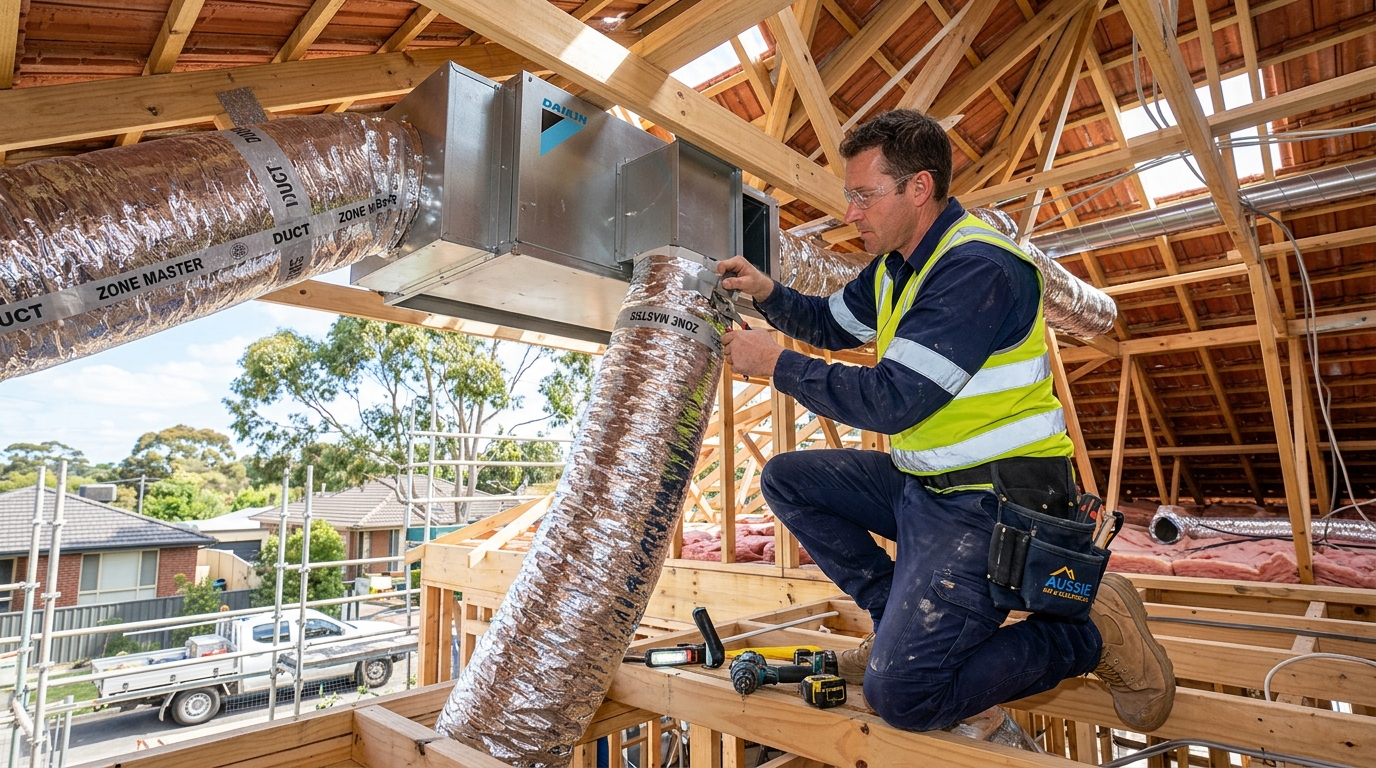
Getting your initial assessment right is crucial for how to quote ducted air conditioning accurately. The biggest money pits are usually undersized systems or unforeseen site complexities. Always start with a thorough site inspection, measuring the floor area and ceiling height of each zone. Consider the home's construction — brick veneer vs. double brick, insulation levels in the ceiling and walls, and window glazing. A poorly insulated home, for instance, will need a larger system capacity or more powerful zoning, driving up the overall ducted aircon cost australia. Factor in the roof type and accessibility too; a low-pitch tile roof with limited crawl space will add significant ducted install labour hours compared to an easy-access metal deck. Don't just rely on plans; physically inspect. If the roof space is tight, that's an immediate flag for extra time on installation. A typical 3-bedroom brick veneer home might require a 12-14kW system, but always verify with a heat load calculation. For example, a standard 150m² home in Sydney could easily need a 14kW unit. Check existing electrical capacity for the new unit, as an upgrade can add $800-$1,500.
Choosing the Right Ducted System and Zoning Strategy
Picking the right system and mapping out the zones determines much of the quote. The answer is to match the system type to the customer's budget and specific home requirements, usually opting for inverter technology for efficiency. Standard ducted systems offer good value, while premium inverter models provide better energy efficiency and quieter operation, typically adding 15-25% to the unit cost. For example, a Daikin 14kW premium inverter model might be $7,500-$9,000, whereas a standard 14kW unit could be $6,000-$7,500 from Reece or Tradelink. Zoning is critical. A well-designed zoned aircon system allows different areas of the home to be cooled or heated independently, saving energy and improving comfort. Most homes benefit from at least 3-5 zones: living, master bedroom, kids' rooms, etc. Complex zoning with more control dampers and advanced thermostats will naturally increase the material cost and ducted install labour. For a 4-zone system, expect an additional $800-$1,500 for the zoning components alone. This setup ensures the client isn't cooling unoccupied rooms, which is a key selling point for energy-conscious customers. Don't over-zone, as it can reduce efficiency; stick to practical areas.
Material and Equipment Pricing – Beyond the Unit
Beyond the main outdoor unit and indoor fan coil, the cost of materials for how to quote ducted air conditioning quickly adds up. The answer is to itemise every single component, from ductwork to grilles. Ducting itself comes in various R-ratings; R1.0, R1.5, and R2.0 are common, with R1.5 or R2.0 typically used for ceiling spaces to meet energy efficiency standards. A good quality R1.5 insulated flexible ducting costs around $6-$8 per linear metre. Grilles and diffusers vary widely in price and style, from basic plastic ceiling diffusers at $30-$50 each to architectural linear slot diffusers at $100-$200 each. Condensate pumps (if required) are usually $150-$300. Refrigerant piping, cabling, and mounting brackets are also essential line items. Don't forget consumables like duct tape, sealants, and insulation. For a 4-bedroom home, you might easily use 100-150 metres of ducting and 8-12 grilles. Always check current trade pricing from suppliers like ActronAir or Temperzone via your trade account to avoid quoting outdated figures. To ensure compliance with building codes and energy efficiency requirements, refer to current Australian Standards for insulation and ventilation, such as those referenced on sites like the Australian Building Codes Board (ABCB) at www.abcb.gov.au. These material costs are a significant part of the overall ducted aircon cost australia.
Estimating Ducted Install Labour Accurately
Accurately estimating ducted install labour is where many quotes fall short. The answer is to break down the job into specific tasks and allocate time, accounting for site conditions. A standard ducted system installation for a single-storey, easy-access home typically takes 1.5 to 2 full days for a team of two qualified technicians. This covers setting up the outdoor unit, positioning the indoor unit, running all ductwork, installing grilles, electrical connections (by a licensed electrician), and commissioning. Complications like multi-storey homes, difficult roof access, existing structural obstructions, or the need for a crane to lift the outdoor unit will add substantial time and cost. For example, lifting an outdoor unit to a second-storey roof could add $400-$800 for crane hire and extra labour. Electrical work, often subcontracted, typically costs $500-$1,000 depending on the scope and whether a new circuit is required. Always factor in travel time to and from the site. Hourly rates for a skilled tradie and apprentice team might range from $120-$160 per hour, so 16-24 hours for a two-person team means $1,920-$3,840 just for labour on a straightforward job. Don't forget waste disposal, which can add $100-$300.
Beyond the Core: Electrical, Permits, and Contingency
Many tradies forget the 'extras' when figuring out how to quote ducted air conditioning, leading to lost profit. The answer is to factor in every necessary ancillary service and build in a contingency. Electrical work is almost always needed; even if the home has existing power, a dedicated circuit with appropriate breaker sizing is often mandatory for new, higher-capacity ducted systems as per AS/NZS 3000. This could involve a new dedicated circuit from the switchboard, adding $500 to $1,500 to the electrical component. Building permits are not always required for like-for-like replacements but are often necessary for new installations or significant structural changes, potentially adding $200-$500 in council fees and application time. Always check local council requirements. Furthermore, a contingency sum, usually 5-10% of the total project cost, is vital for unforeseen issues like unexpected asbestos discovery (which requires specialist removal), hidden structural beams, or rotten timber. For a $12,000 ducted aircon installation, a 7% contingency adds $840 to the quote, protecting your margin from surprises.
Presenting Your Ducted AC Quote with Confidence
Presenting a clear, detailed quote is essential to convert leads. The answer is to use professional quoting software like QuoteMate to itemise everything and clearly explain the scope. A well-structured quote builds trust and justifies your pricing. Break down the ducted aircon cost australia into clear line items: unit cost, ducting, grilles, zoning components, electrical work, and ducted install labour. Show the brand and model of the system. Include terms and conditions, warranty information, and payment schedules. For instance, specify a 20% deposit upfront, 50% upon rough-in completion, and the remaining 30% upon commissioning. Using QuoteMate helps you quickly generate branded PDF quotes that look sharp and can be sent directly from your phone on site. It also assists with real-time supplier pricing, ensuring your quotes are always up-to-date, preventing losses from fluctuating material costs. Highlight the benefits of the chosen system, such as energy efficiency for inverter models or the comfort of a zoned aircon system. A clear quote for a ducted system might include a 5-year parts and labour warranty.
Avoiding Common Pitfalls in Ducted AC Quotes
Avoid common errors to keep your quotes accurate and profitable. The biggest mistake is underestimating roof space complexity and ducting runs. Always assume the worst until proven otherwise. Another common pitfall is forgetting to factor in refrigerant gas costs, especially for larger systems or longer pipe runs, where a top-up could be an extra $50-$150. Not accounting for waste disposal and skip bin hire, which can easily be $200-$400 for a significant renovation, also eats into profits. Failing to confirm power availability or requiring a switchboard upgrade often leads to unexpected electrical costs. A precise quote for how to quote ducted air conditioning must include these details upfront. Double-check all measurements and cross-reference against supplier specifications. If you're using older pricing guides, you're losing money; materials and units fluctuate monthly. For example, copper prices alone can swing 5-10% in a quarter. Always get current supplier prices before sending the final quote. This attention to detail will prevent nasty surprises and ensure your quoted price covers your actual costs.
Pro Tips
- Always do a physical site inspection; never quote solely from plans or photos.
- Factor in roof access difficulty; tight spaces significantly increase labour time.
- Quote R1.5 or R2.0 insulated ducting to meet energy standards and prevent heat loss.
- Itemise all electrical work, even if subcontracted, and specify a dedicated circuit if needed.
- Include a 5-10% contingency for unforeseen site issues or material price fluctuations.
- Use current trade pricing from suppliers like Reece or Tradelink, not old catalogues.
- Break down zoned aircon system costs clearly to justify pricing to the client.
- Detail waste removal and disposal fees as a separate line item to avoid surprises.
Quote This Job in Under 2 Minutes
Skip the spreadsheet. QuoteMate’s AI pulls real-time supplier prices and generates a professional PDF quote you can send on the spot.
Or try it on the web →Related Template
Related Trade
More Guides
- How to Quote a Bathroom Renovation in Australia
- How to Quote a Deck Build in Australia
- How to Quote a Kitchen Renovation in Australia
- How to Quote a Fence Installation in Australia
- How to Quote Painting a House in Australia
- How to Quote a Concrete Driveway in Australia
- How to Quote a Solar Panel Installation in Australia
- How to Quote a Pergola Build in Australia