How to Quote Tile and Slate Work Accurately for Australian Tradies
Learn how to quote tile and slate work without leaving money on the table. Get precise material, labour, and waterproofing costs to secure your margin.
Quick answer
Quote standard tiling per square metre, with a minimum charge of around $350 plus materials for small repairs under 5m². Allow 10% wastage for straight-laid tiles and 15–20% for intricate patterns or large-format tiles, and load the m² rate on small jobs to cover setup time. Complex prep or specialist slate work can justify an hourly rate instead.
Tiling quote allowances
| Item | Allowance |
|---|---|
| Minimum charge, small repairs under 5m² | about $350 + materials |
| Wastage, straight-laid square tiles | 10% |
| Wastage, patterns and large-format tiles | 15–20% |
Load the m² rate on small jobs to cover setup time.
Getting Your Tile & Slate Quoting Right from the Start
Quoting tile and slate work is often where tradies lose money, not because the job is complex, but because the quote misses hidden costs. Whether it's a bathroom reno, a kitchen splashback, or a full slate roof, getting your pricing tight from the start is crucial. This guide shows you how to quote tile and slate work accurately, covering everything from materials and labour to site prep and essential waterproofing. We’ll cut through the guesswork so you can deliver precise, profitable quotes every time, making sure you cover all your costs and secure a fair margin.
Choosing Your Pricing Method: Per Square Metre or Hourly Rates?
Most tiling jobs are quoted per square metre (m2) for laying, but some specialist work or complex prep can warrant an hourly rate. For standard floor tiling, a cost per m2 approach is common and makes it easy to compare. However, if the job involves intricate patterns, difficult access, or significant subfloor levelling, switching to an hourly rate or adding specific line items for these tasks is smarter. Always factor in project size; smaller jobs usually have a higher floor tiling cost per m2 to cover setup time. For larger projects over 50m2, you might offer a slightly lower m2 rate, while small repairs under 5m2 might incur a minimum charge of around $350 plus materials.
Calculating Materials: Tiles, Adhesive, Grout, and Waste
Never guess your material quantities. Start with the exact area to be tiled and add a tile waste factor. For standard square or rectangular tiles, allow 10% for cuts and breakages. For intricate patterns, large format tiles, or unusual room shapes, bump this up to 15-20%. Tile adhesive pricing varies significantly based on type (e.g., standard cement-based vs. flexible, fast-setting, or specific large-format adhesives). Always check current prices with your suppliers. Grout quantity depends on tile size and joint width. A 20kg bag of standard grout might cover 15-20m2 for 300x300mm tiles with a 3mm joint, but always refer to the manufacturer's coverage rates. Don't forget trims, sealants, and levelling compounds.
Estimating Labour Costs for a Solid Margin on Every Job
Labour is usually the biggest cost, so get this right. Break down each stage: demolition, subfloor preparation (levelling, grinding), waterproofing, tile laying, grouting, and cleanup. For a bathroom, demolition might take 4-8 hours. Prep work like levelling or grinding an existing slab can add 2-6 hours per room, depending on condition. Laying standard ceramic tiles can range from 1.5 to 3 hours per square metre, depending on tile size, layout complexity, and site access. Grouting typically takes 0.5 to 1 hour per 10 square metres. Always factor in travel time, loading/unloading materials, and site setup. Your hourly rate should cover wages, super, insurance, vehicle costs, and a profit margin; aim for $80-$120 per hour for an experienced tiler, or more for specialist work.
Don't Forget the Extras: Prep, Waterproofing, and Trims
Often, jobs blow out because tradies forget the essential extras. Always include detailed line items for site preparation, such as demolition and removal of existing tiles (factor in skip bin hire, roughly $300-$600 for a small skip). Waterproofing is non-negotiable for wet areas and must comply with Australian Standard AS 3740-2021. Quote this as a separate item; a typical bathroom waterproofing job might cost $400-$800 in materials and labour. Check specific product requirements at www.standards.org.au/standards-catalogue/sa-snz/b/as-nzs-3740. Add costs for floor levelling compounds (e.g., Ardex K 15, around $70 per 20kg bag), movement joints, silicones, and aluminium or PVC trims, which can range from $15-$30 per lineal metre. These small items add up quickly on how to quote tile and slate work.
Special Considerations for Slate Work: Material & Installation
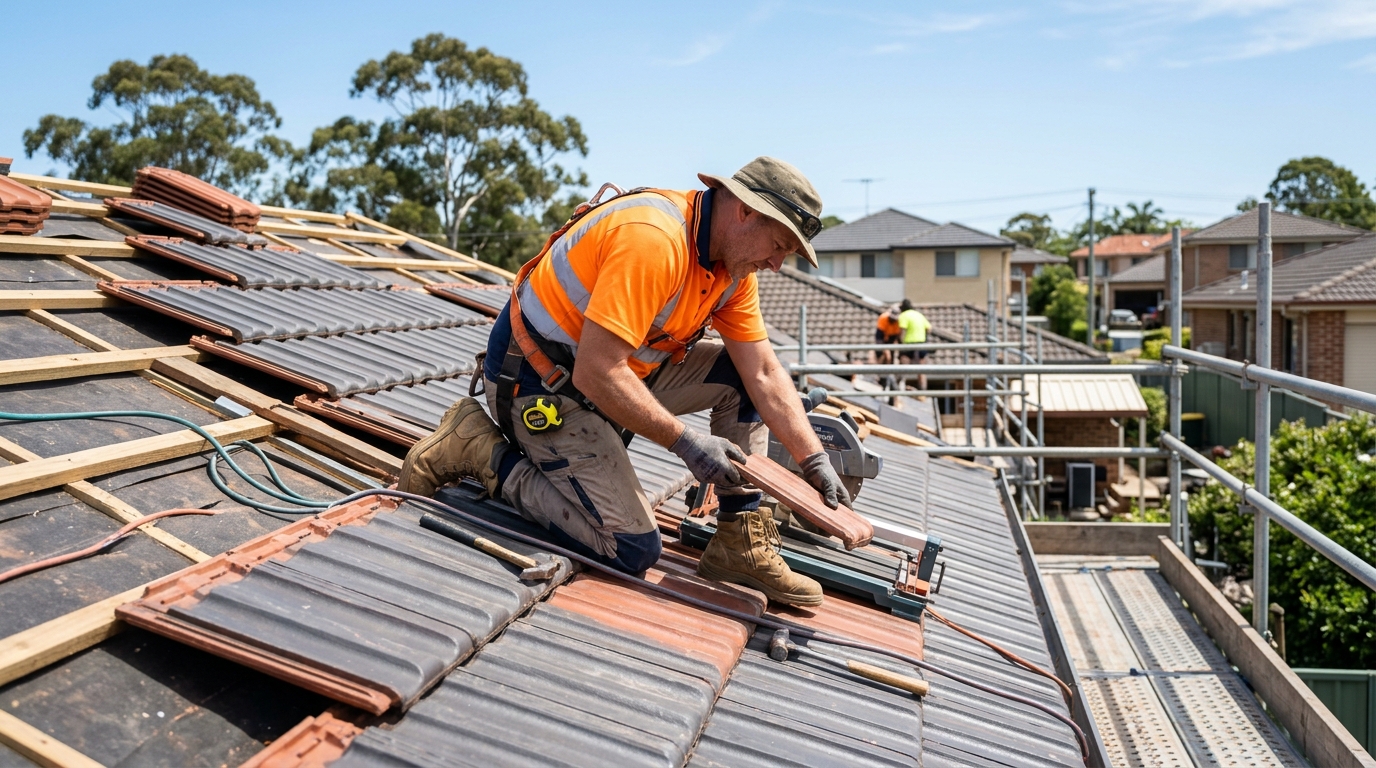
Slate work, whether for floors, walls, or roofing, brings its own set of challenges and costs. Natural slate is heavier and more brittle than ceramic or porcelain, requiring more careful handling and cutting. The material cost for natural slate can be significantly higher, often ranging from $60-$150 per square metre for the slate itself, depending on quality and origin. Installation often takes longer due to the irregular nature of the material, requiring more precise cuts and fitting. Labour rates for slate can be 20-30% higher than for standard tiling. If you’re working with slate roofing, you'll need specialised fixing systems and highly skilled labour. Always specify the type of slate (e.g., Brazilian, Indian, Australian) and its thickness in your quote, and confirm supplier availability and lead times.
Avoiding Common Quoting Mistakes in Tiling Projects
The fastest way to lose money is to underquote. A common mistake is not accounting for access challenges; carrying heavy tile boxes up three flights of stairs adds labour time. Another error is forgetting to specify who supplies what; clearly state if the customer is supplying tiles or if you’re sourcing everything. Always include a contingency for unforeseen issues, especially in older homes – a 5-10% buffer is reasonable for unexpected subfloor repairs or discovery of asbestos (which requires specialist removal). Using an app like QuoteMate helps you build detailed line items quickly, ensuring you capture every cost. Don't assume all sealants or grouts are the same; specify premium products for high-traffic or wet areas. A good quote template ensures you don't miss these critical details, turning a potential loss into a guaranteed profit.
Pro Tips
- Always measure the area twice, then add a 10-15% tile waste factor for cuts and breakages.
- Get current adhesive and grout prices directly from suppliers like Reece or Tradelink before quoting.
- Charge a minimum call-out or small job fee, typically $350-$500, for projects under 5m2.
- Clearly itemise demolition, waterproofing, and rubbish removal – don't bundle them into 'labour'.
- Specify the exact tile type and size in your quote to avoid disputes later on.
- Include a 5-10% contingency for unforeseen site issues, especially in older properties.
- Use Australian Standards (e.g., AS 3740) as a reference point for all wet area work.
- For slate, account for extra time in cutting and handling due to its weight and brittleness.
Quote This Job in Under 2 Minutes
Skip the spreadsheet. QuoteMate’s AI pulls real-time supplier prices and generates a professional PDF quote you can send on the spot.
Or try it on the web →Related Trade
More Guides
- Nailing Your Margin: How to Quote Bathroom Tiling Jobs Correctly
- Mastering How to Quote a Garage Door Replacement Accurately
- How to Quote Outdoor Kitchen Build Projects: A Tradie's Guide to Profit
- How to Quote Window Replacement: A Tradie's Guide to Accurate Estimates
- How to Quote Commercial Cleaning Jobs: Setting Fair Rates in Australia
- Choosing the Best Tradie Job Management App for Your Business
- Ditch the Whiteboard: Why You Need a Job Scheduling App for Tradies
- Mastering the Trade: How to Track Tradie Jobs From Quote to Paid