Mastering Pool Fencing: How to Quote Pool Fencing Installation Accurately
Accurate pool fence quotes prevent costly errors. Learn to price materials, labour, and compliance for any pool fencing installation job in Australia.
Quick answer
Pool fencing installation in Australia is quoted per lineal metre: aluminium panels run $80-$150, framed glass $180-$350, and frameless glass $350-$600, before labour. Crews charge $80-$120 per person per hour, and every fence must meet AS 1926.1-2012 for height, self-closing gates, and non-climbable zones. Factor in council inspection fees of $150-$300 and a 5-10% contingency.
Understanding the True Pool Fencing Costs in Australia
Quoting pool fencing installation isn't just about slapping a price on glass panels; it's about accounting for every variable that impacts the final pool fence cost Australia wide. The biggest blowouts happen from overlooked site specifics and non-compliant installations. Get these right, and your quote holds up. When you're putting together a quote, consider the site's slope, soil type, and access. A simple flat-ground install with clear access is a world away from a job on a sloping backyard with tight entry for materials. For an average residential job, expect material costs to be between $150-$450 per lineal metre, before labour. Overlooking these early details means you'll eat into your margin later on, especially if you have to bring in extra gear or labour. Always start with a detailed site visit.
Material Choices: Aluminium, Glass, and Timber Pricing
The choice of material significantly dictates the final cost and installation method. Aluminium panel fencing is a popular choice for its durability and lower cost. Expect to quote between $80-$150 per lineal metre for basic aluminium panels from the major suppliers, not including posts or gates. For a sleek glass pool fence quote, fully framed options start around $180-$350 per lineal metre, while frameless glass, which requires heavy-duty spigots, can push costs to $350-$600 per lineal metre, or even higher for custom sizes. Timber fences, while less common for pool surrounds due to maintenance, might be around $70-$120 per lineal metre for treated pine. Always check your current supplier prices from places like Reece or Tradelink for fittings and spigots, as these can fluctuate often. Using accurate, real-time pricing ensures your margins are locked in from the start.
Site Assessment and Precise Measurements for Your Quote
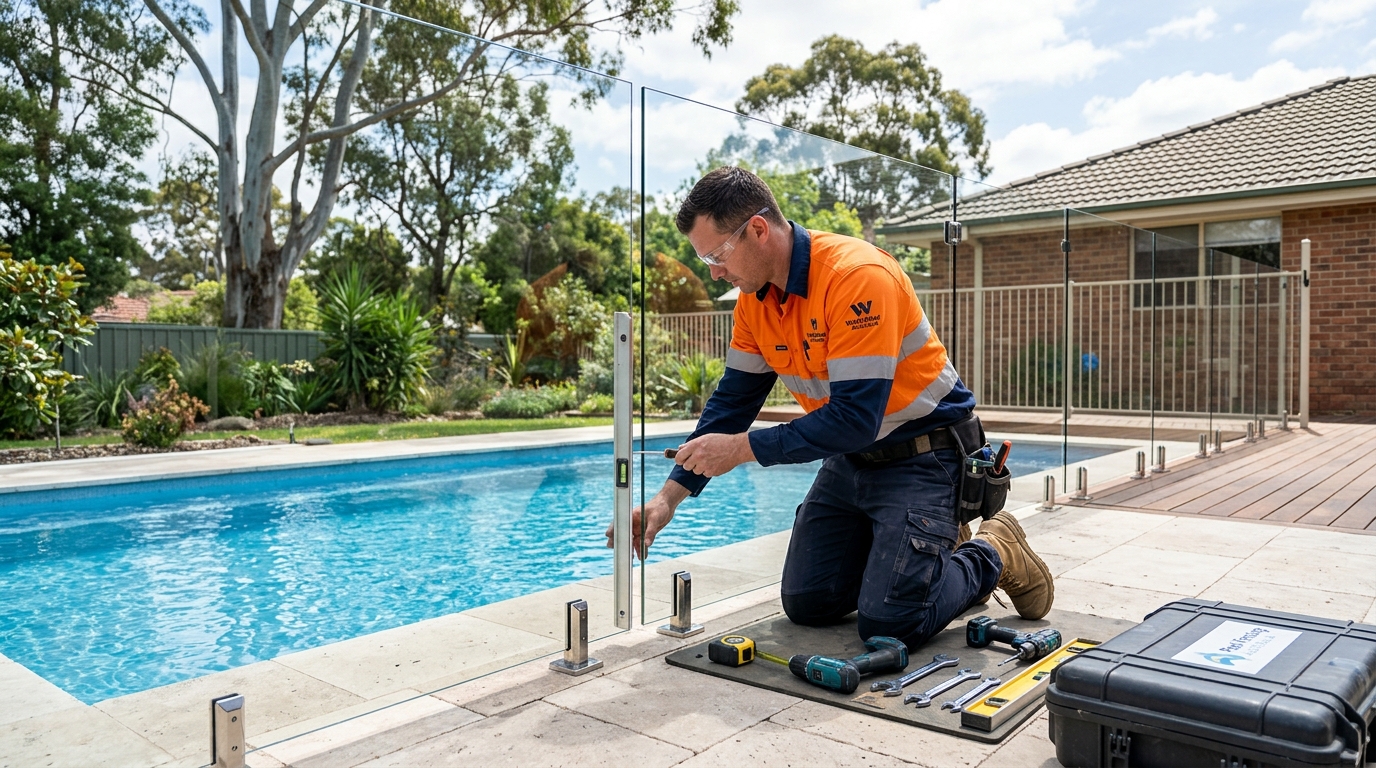
Accurate measurements are the bedrock of any solid pool fencing quote. Missing a corner or miscalculating a gate opening means reordering panels or cutting expensive glass on-site, which costs time and money. Always measure twice, using a laser measurer for precision, especially on uneven ground. Document the entire perimeter, noting any existing structures, retaining walls, or garden beds that will impact post placement. Identify potential issues like buried services or rock formations that might require specialised digging equipment. For example, installing 12mm frameless glass panels (typically 1200mm high) on a hard-rock site will add $30-$50 per post hole for rock drilling, compared to standard soil. Factor in extra time and materials for any non-standard angles or custom panel requirements. A detailed site sketch with dimensions and notes on ground conditions helps avoid disputes later.
Labour & Installation: Pricing Your Time and Skill
Your labour is a significant part of the pool fencing cost Australia clients pay. Don't underprice your expertise. Calculate your crew's hourly rate, including on-costs like superannuation, insurance, and vehicle expenses. A two-person crew for a straightforward 20-metre aluminium fence might take 1-2 days, while a complex frameless glass installation over a similar distance could easily take 3-4 days, especially with custom cutting or difficult access. Set your hourly rate for skilled labour at a minimum of $80-$120 per person, per hour, for standard installs. Remember to factor in travel time to and from the site, as well as time spent picking up materials. For heavy-duty lifting, like with large glass panels, you might need specialised suction lifters, which can cost $50-$100 per day to hire. Clearly itemise labour hours in your quote so the client understands the value of your work.
Navigating Regulations and Ensuring Pool Fence Compliance
Pool fence compliance is non-negotiable and varies slightly by state, but all Australian pool fences must meet AS 1926.1-2012. This standard dictates minimum fence heights (1200mm), gate self-closing and self-latching mechanisms, and non-climbable zones. Failure to comply can lead to hefty fines for homeowners and rework for you. Always factor in time for understanding local council requirements and potential inspection costs. Some councils charge $150-$300 for a final inspection certificate. Specify that your quote includes materials and installation to meet AS 1926.1-2012, and advise the client on their responsibility for ongoing certification. For detailed compliance info, refer to your state's building regulator or www.standards.org.au for access to the Australian Standards.
Gates, Latches, and Additional Features for an Accurate Quote
Gates and their hardware are critical for both safety and functionality, and they’re often where extra costs sneak into a pool fencing job. Self-closing and self-latching gates are a mandatory part of pool fence compliance. Standard spring-loaded hinges and magnetic latches cost between $80-$200 per gate set, but upgrade options like hydraulic soft-closing hinges or key-lockable latches can cost upwards of $300-$500 per gate. Also consider additional features such as custom panel shapes for unique landscaping, extra gate widths for accessibility, or the integration of a child-safety pool alarm. Each custom element adds to material and labour time. Clearly list these as separate line items in your QuoteMate proposal. For instance, a custom raked glass panel for a sloping section might add 30-50% to the cost of a standard panel, plus additional design and cutting time.
Final Quote Review and Contingency Planning
Before sending off any pool fencing quote, give it a thorough once-over. Ensure all measurements are double-checked, material costs are current, and labour estimates are realistic. It’s smart to build a small contingency — around 5-10% — into your quote for unforeseen issues, especially on older properties or sites with tricky access. This isn't padding; it's smart business for potential ground surprises or slight material price bumps. Don’t forget to include GST in your final figure. Present your quote clearly, perhaps with different options for materials, so the client can choose what suits their budget. An organised quote built with an app like QuoteMate makes it easy to add detailed line items and present a professional estimate.
Pro Tips
- Always verify current material prices from your suppliers before quoting.
- Factor in extra labour time for rock drilling or difficult site access.
- Clearly specify if your quote includes council inspection fees or just installation.
- Measure the pool fence perimeter precisely; a laser measurer is your best mate.
- Don't forget self-closing hinges and child-resistant latches for compliance.
- Add a 5-10% contingency for unexpected site conditions or material costs.
- Discuss gate swing direction and latch height with the client upfront.
- Use QuoteMate to itemise materials and labour for transparent pricing.
Quote This Job in Under 2 Minutes
Skip the spreadsheet. QuoteMate’s AI pulls real-time supplier prices and generates a professional PDF quote you can send on the spot.
Or try it on the web →Related Template
Related Trade
More Guides
- Keeping Your Books Straight: Why a Tradie Work Pipeline Dashboard is a Must-Have
- A Tradie's Guide: How to Handle a Renovation Job Lifecycle Effectively
- Choosing Your Tradie Job Management App vs ServiceM8: A QuoteMate Comparison
- Picking the Right Tradie Job Management App: Your Australian Comparison Guide
- Finding the Right Free Tradie Job Management App for Your Building Business
- Keeping Your Books Clean: Effective Tradie Job Overdue Invoice Tracking
- How to Quote a Bathroom Renovation in Australia
- How to Quote a Deck Build in Australia