How to Quote Timber Floor Sanding: A Tradie's Guide to Accurate Pricing
Get your timber floor sanding quotes right every time. Learn to price accurately, factor in prep, finishes, and avoid common cost blowouts for better margins.
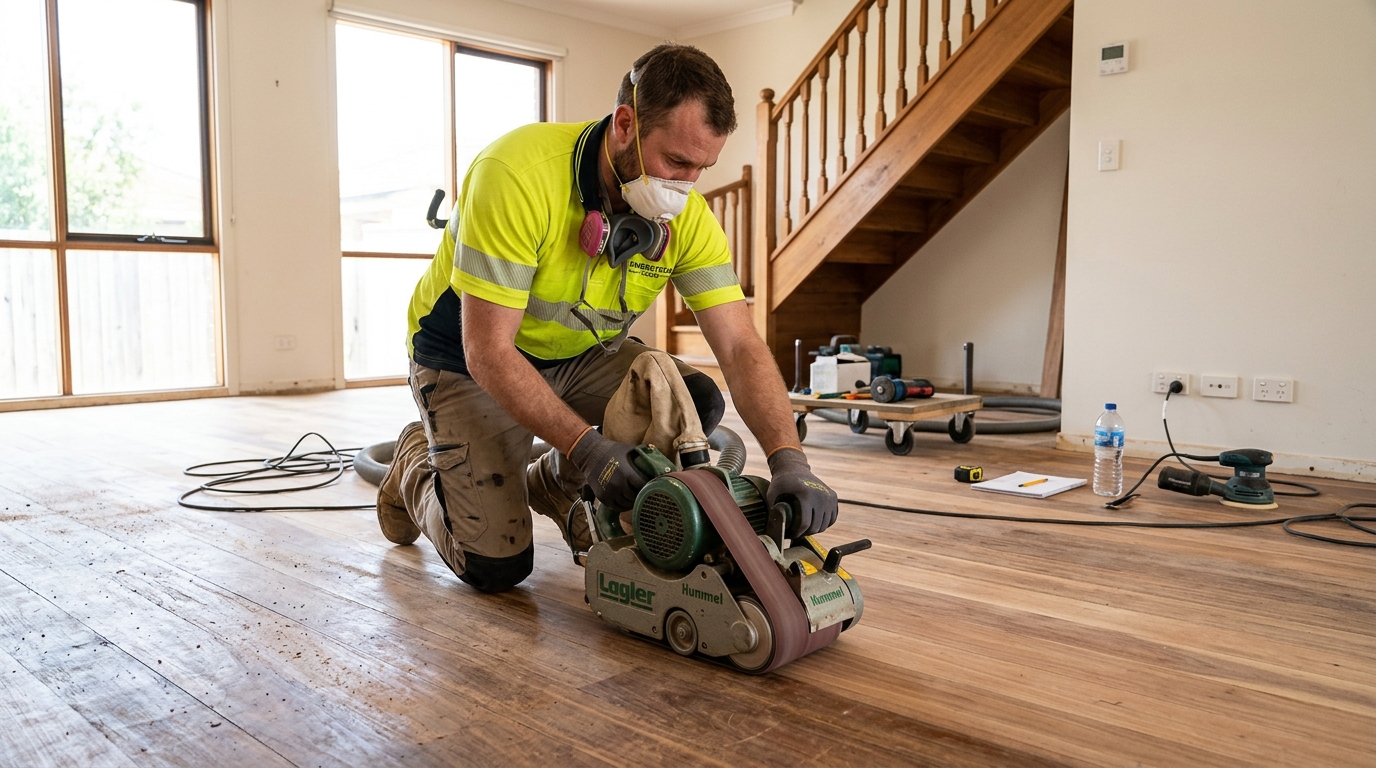
Getting Your Timber Floor Sanding Quote Spot On
Getting your timber floor sanding quotes right means nailing the prep, understanding finish options, and accurately estimating the time on site. The biggest blowouts for tradies on these jobs usually come from underestimating repair work or using outdated material prices. If you're wondering how to quote timber floor sanding without leaving money on the table, focus on these key areas. Expect to quote between $35 to $70 per square metre for sanding and two coats of a standard polyurethane finish, but this 'floor sanding cost per m2' can vary significantly based on several factors. Not all floors are created equal; what seems like a simple sand can quickly turn into a time sink if you haven't accounted for the floor's actual condition or hidden issues.
What Drives the Price of a Floor Sanding Job
The final price for a floor sanding job isn't just about the square metre rate; it's heavily influenced by the existing floor's condition, the timber species, and how easy it is to access. A floor with deep scratches, stains, or extensive pet damage will require more aggressive sanding and potentially more filler, adding to your labour and material costs. Exotic or particularly hard timbers, like Jarrah or Ironbark, demand more abrasive effort and time than softer varieties like Pine. Small, awkwardly shaped rooms or properties with stairs will also slow down your crew, as will a site that requires you to carry gear long distances. Always factor in these 'complication' rates; for instance, a heavily damaged Cypress Pine floor needing extensive repair might add $10-15/m2 compared to a relatively clean Spotted Gum.
Your Step-by-Step Sanding Process (and How to Price Each Bit)
Breaking down the floor sanding job into its core steps makes quoting clearer and helps you avoid missed costs. Start with your initial site assessment and preparation, which includes protecting adjacent areas and setting up dust extraction. Then comes the sanding itself, typically starting with coarse grits to level and remove old finishes, moving to medium, and finally fine grits for a smooth surface. Each pass requires time for machine changes and vacuuming. After sanding, there's gap filling, a final buff, and then the application of the chosen finish. Each stage has distinct labour and material costs. For example, allocate 2-4 hours for initial setup and dust sealing on an average 50m2 job, priced at your hourly rate, plus consumables like drop sheets and masking tape.
Picking Finishes: Costs and Durability for Clients
The type of finish chosen significantly impacts both the final quote and the floor's durability. There are three main types: solvent-based polyurethane, water-based, and oil-modified. Solvent-based polyurethane offers excellent durability and a traditional ambering effect but comes with strong fumes and longer drying times. Water-based finishes are low VOC, faster drying, and keep the timber's natural colour but can be more expensive per litre and require more coats for similar durability. Oil-modified finishes penetrate the timber, offering a natural look that's easier to repair locally. When pricing, remember that a quality two-pack water-based finish can add $8-15/m2 over a basic single-pack solvent option due to material cost and potentially more coats. Always check current supplier pricing at places like Bunnings or specialty paint stores. For detailed product information, you can always refer to manufacturer technical specifications like those found on reputable sites such as www.feastwatson.com.au/products/floors.
Don't Skimp on Prep: Pricing the Groundwork for Hardwood Floor Refurbishment
Clients often underestimate the crucial preparation work required before any sanding even begins. This is where many tradies lose money if it's not quoted properly. Prep includes emptying the room entirely, punching down all nails, and removing any staples, tacks, or old adhesives. Major repairs like replacing damaged boards, fixing loose subfloor sections, or extensive gap filling also fall into this category. Every minute spent on site before the sanding machine even fires up needs to be accounted for in your quote. This groundwork is vital for a successful 'hardwood floor refurbishment' but can be time-consuming. Removing old carpet, staples, and minor repairs on a 60m2 floor can easily take a day of labour for two people, costing you $800-$1200 if not quoted separately from the sanding rate.
Boosting Your Quoting Accuracy with the Right Tools
Accurate quoting isn't just about knowing your trade; it's about having the right tools to manage your numbers. Relying on rough estimates or old spreadsheets risks underpricing your expertise and materials. A dedicated quoting app helps you build detailed line items for every aspect of the job, from abrasives and fillers to the specific finish and your labour rates. This ensures you capture all costs, including GST, and present a professional quote to your client. A good quoting app like QuoteMate helps you quickly add all line items, from abrasives sourced from Bunnings to your preferred finish from Wattyl or Cabot's, ensuring you capture GST correctly and automatically factor in your desired margin.
Avoiding Common Blunders That Eat Your Margin
Even seasoned tradies can fall into traps that erode their profit on a floor sanding job. One common blunder is failing to account for hidden damage that only becomes obvious once the old finish is gone. Always include a clause in your quote for unforeseen repairs. Underestimating access challenges – like flights of stairs or tight doorways – can also chew into your time. Dust management and proper ventilation are health and safety requirements that require specific gear and time to set up and pack down. Finally, don't forget travel time and fuel costs for each day on site, especially for multi-day jobs. Always factor in a 10-15% contingency for unforeseen repairs or extra sanding passes. For a $3,000 job, that's $300-$450 in your back pocket to cover surprises and protect your margin.
Pro Tips
- Always do a thorough site inspection before quoting, don't rely on photos.
- Measure every room accurately; even a few square metres can impact profits.
- Clearly separate preparation costs (repairs, nail punching) from sanding and finishing.
- Get current supplier prices for abrasives, fillers, and finishes before sending a quote.
- Factor in drying times between coats – it affects your schedule and potential overheads.
- Account for consumable costs like dust bags, masking tape, and drop sheets.
- Always clarify with the client who is responsible for moving furniture.
- Confirm the desired finish type and sheen level with your client in writing.
Quote This Job in Under 2 Minutes
Skip the spreadsheet. QuoteMate’s AI pulls real-time supplier prices and generates a professional PDF quote you can send on the spot.
Or try it on the web →Related Template
Related Trade
More Guides
- How to Quote a Bathroom Renovation in Australia
- How to Quote a Deck Build in Australia
- How to Quote a Kitchen Renovation in Australia
- How to Quote a Fence Installation in Australia
- How to Quote Painting a House in Australia
- How to Quote a Concrete Driveway in Australia
- How to Quote a Solar Panel Installation in Australia
- How to Quote a Pergola Build in Australia